
Where we focus in Detroit
Detroit covers nearly 143 square miles, and no honest guide fits all of it on one page. Our Detroit work is concentrated in three neighborhoods where the housing is historic, prices run well above the citywide norm, and buyers and sellers have specific needs: Palmer Woods on the north end near Woodward and Seven Mile, Boston-Edison along the boulevards west of Woodward, and Indian Village on the east side off East Jefferson. These are places where a home may be a hundred years old, sit inside a designated historic district, and carry a tax bill that surprises people from the suburbs. They are also some of the most beautiful residential streets in Michigan.
Palmer Woods: winding streets and Tudor Revival estates
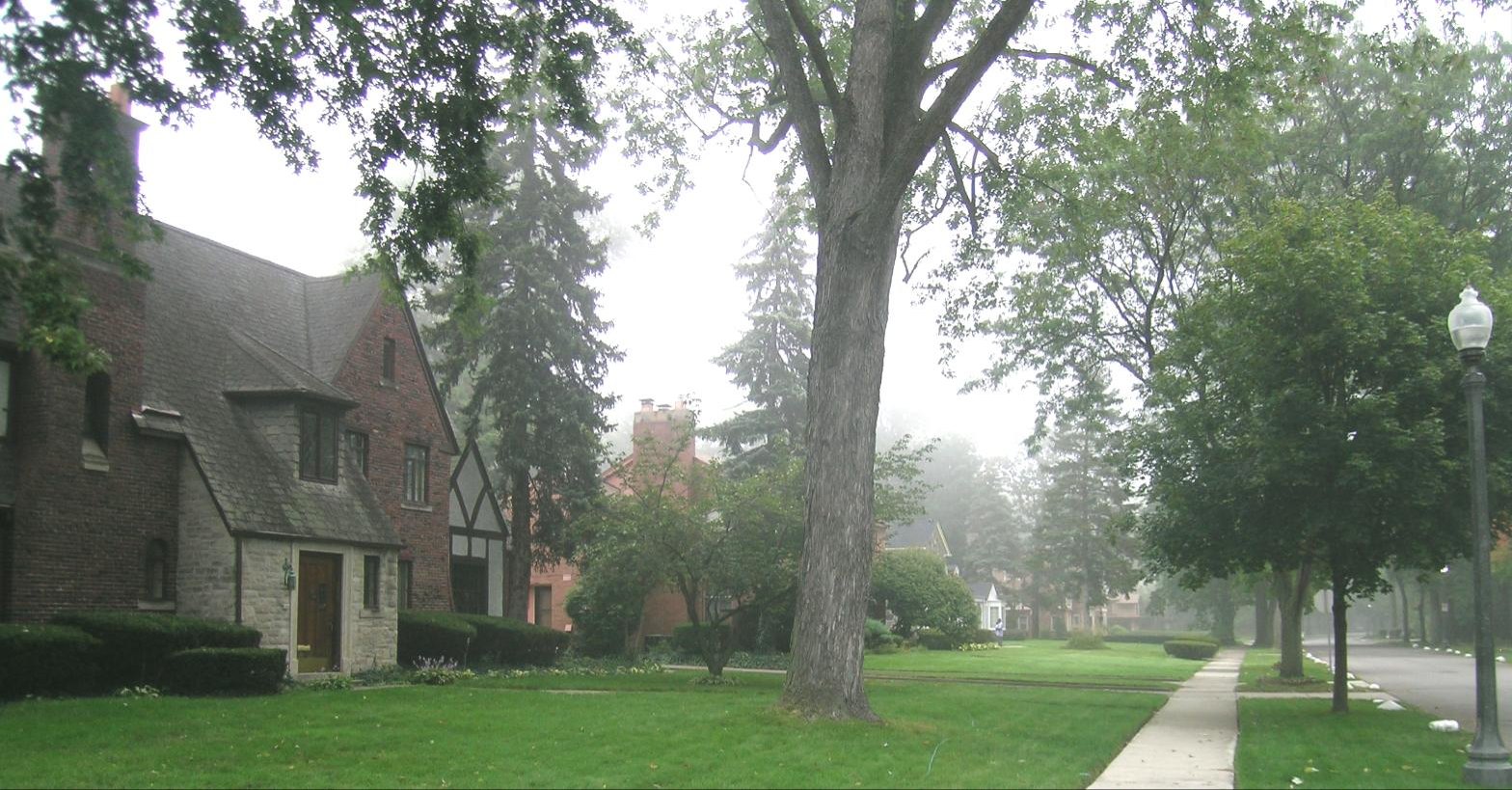
Palmer Woods was platted in 1915 on 188 acres that developer Charles W. Burton bought from the estate of Senator Thomas Palmer. Landscape architect Ossian Cole Simonds laid out curving streets with almost no through traffic, a deliberate break from Detroit's grid, and drew the lots irregular so no two are alike. The neighborhood is bounded by Seven Mile Road, Woodward Avenue and Strathcona Drive, and it was listed on the National Register of Historic Places in 1983.
Most of the roughly 300 homes went up between 1917 and 1929. Tudor Revival dominates, in red brick, stone, stucco and slate with half-timbering and leaded glass, alongside Colonial Revival, Georgian, Mediterranean and Arts and Crafts houses. Later additions include Minoru Yamasaki designs and the Dorothy Turkel House, the only Frank Lloyd Wright home in Detroit. Sizes run from modest by Palmer Woods standards to the 35,000-square-foot Fisher estate. These are custom masonry homes with slate roofs, plaster walls and original windows on big lots: wonderful to live in, expensive to maintain, with an active association that runs home tours and house concerts.
Indian Village: Detroit's original mansion district
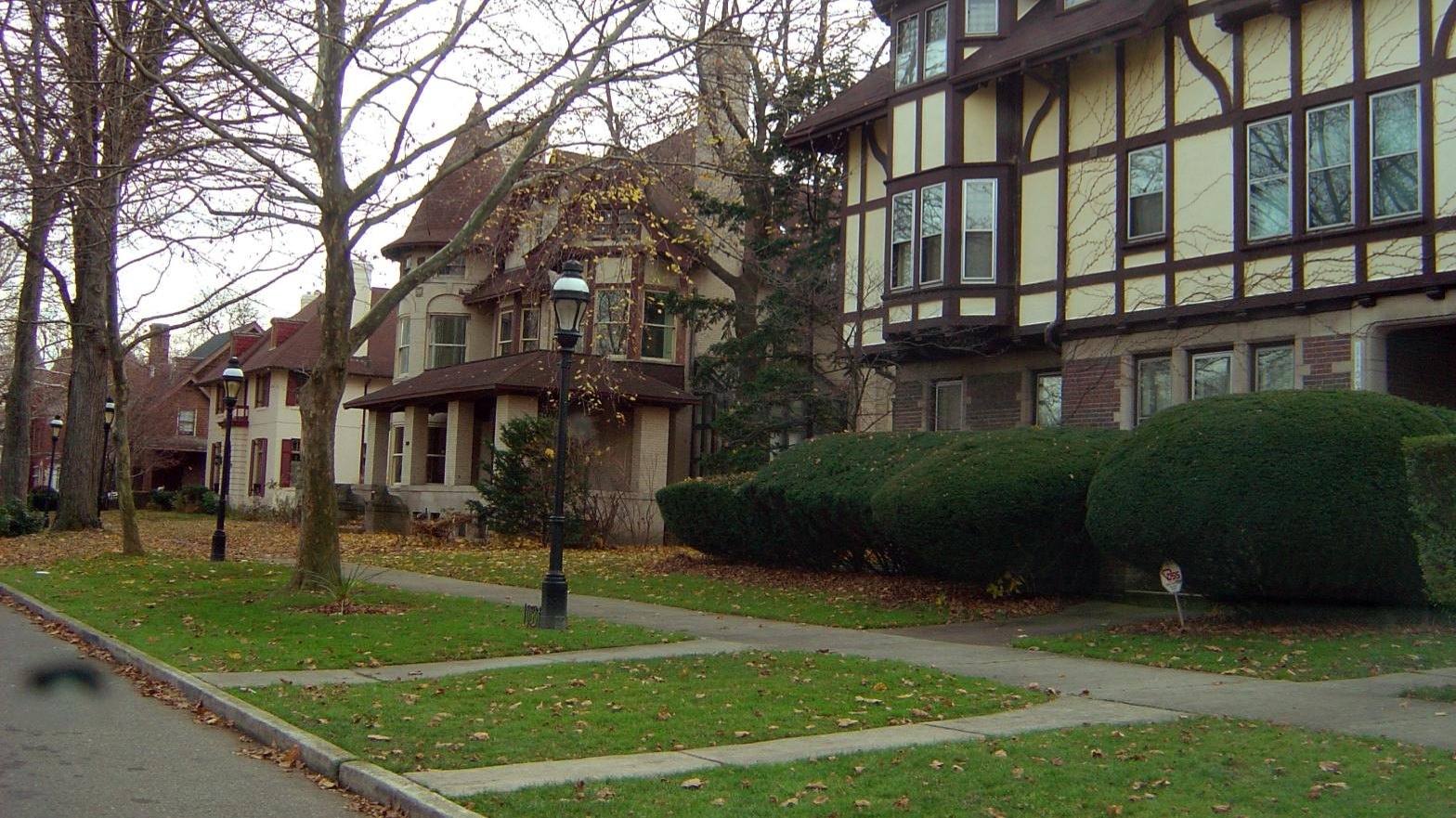
Indian Village sits about three miles from downtown on the east side, three streets wide: Burns, Iroquois and Seminole, between East Jefferson and Mack Avenue. The Cook family's heirs began developing their old ribbon farms around 1893 as a first class residential district on a generous scale, in their words. The first house went up in 1895 and most of the neighborhood was finished by the late 1920s. It was listed on the National Register in 1972 and is one of Detroit's earliest city-designated local historic districts.
The architecture is the draw. Albert Kahn, Louis Kamper and William Stratton designed homes here in Georgian, Federal, Colonial Revival, Tudor Revival and Arts and Crafts styles for owners like Henry Leland of Cadillac and Lincoln. Expect carved woodwork, Pewabic tile, third-floor ballrooms, servants' quarters and carriage houses bigger than a suburban ranch; many houses exceed 12,000 square feet. The Home and Garden Tour on the first Saturday in June is the best way to see inside. West Village, with its 1905 to 1925 houses, borders it to the west and shares much of the same buyer pool.
Boston-Edison: Detroit's grand boulevard district
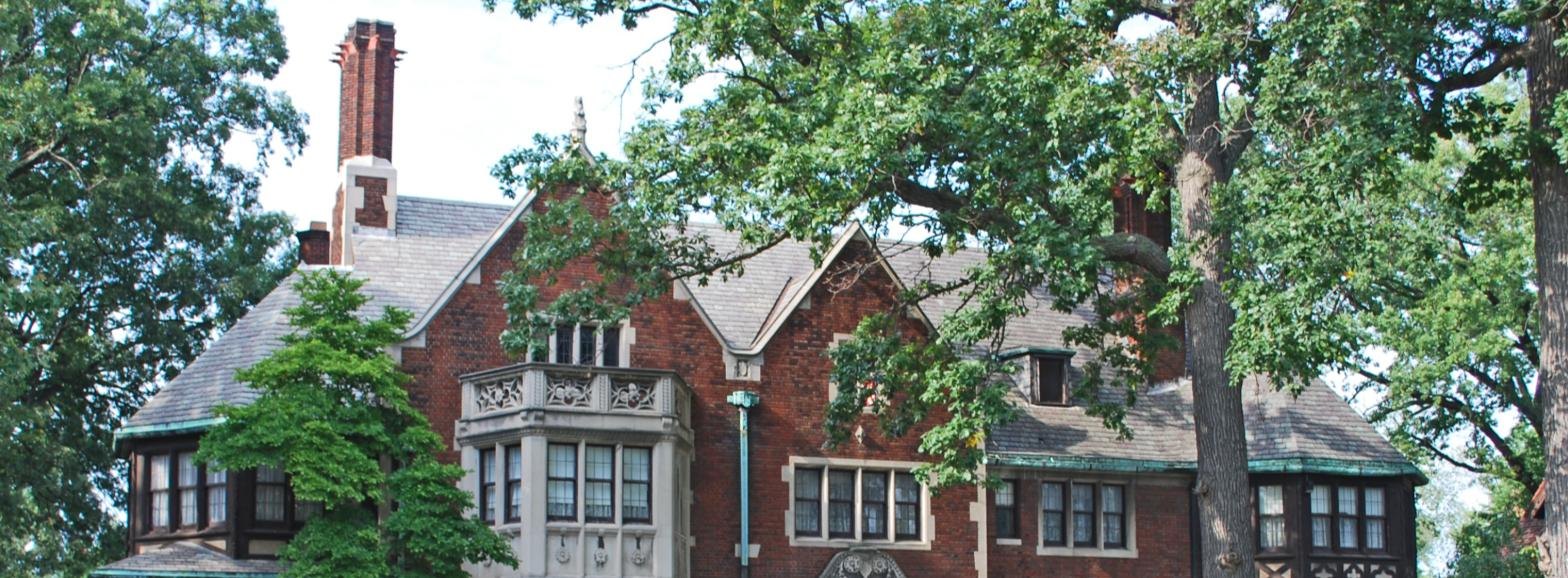
Boston-Edison is one of the largest residential historic districts in the country: about 900 homes on four east-west boulevards, West Boston, Chicago, Longfellow and Edison, running from Woodward Avenue west to Linwood. The first homes went up around 1905 and most of the district was built out by 1925. It was listed on the National Register of Historic Places in 1975 and is a city-designated local historic district.
This is where Detroit's industrial money lived. Henry Ford built at 140 Edison, and Sebastian Kresge, James Couzens, Walter Briggs and the Fisher brothers all had homes here; decades later Berry Gordy bought the Fisher mansion on Boston Boulevard. The houses are large, from about 3,000 square feet to well over 15,000, in Tudor Revival, Colonial Revival, Renaissance Revival, Prairie and Arts and Crafts styles, most in brick or stone on wide lots with the boulevard medians out front. The Historic Boston-Edison Association runs the neighborhood's home tour and is one of the most active associations in the city.
The rest of the city, briefly
Detroit was founded in 1701 and is the seat of Wayne County. The 2020 census counted 639,111 residents, and in 2024 the city recorded its first population increase since the 1950s. General Motors, Ford and Stellantis are headquartered in the region. Downtown has the Riverwalk, Campus Martius, the three stadiums and the Renaissance Center, with the QLine running up Woodward. Palmer Park, just south of Palmer Woods, is mostly 1920s apartment buildings and condos around a 296-acre park; Arden Park, Sherwood Forest and the University District draw the same kind of buyer as the three neighborhoods above, and we are glad to help there too. Citywide, condition and value vary block by block far more than in the suburbs.
Schools and getting around
Public schools are run by the Detroit Public Schools Community District, and many families also weigh charter and private options. I-75, I-94, I-96 and the M-10 Lodge cover the city, with the Lodge a few blocks from Boston-Edison and I-75 a few miles from Palmer Woods. DDOT buses run on Woodward, McNichols, Seven Mile and Livernois, and SMART's FAST Woodward line runs the length of Woodward. Indian Village sits on East Jefferson, a short drive from downtown.
What buyers should know
Historic district rules are real. In Detroit's city-designated local historic districts, the Historic District Commission reviews permit applications for exterior changes, including windows, roofing and additions. Interiors are rarely regulated. Not every address in a historic-looking neighborhood is inside a local district, so we check the specific house before you plan a project.
Property taxes are high. A 2024 Lincoln Institute of Land Policy study found Detroit had the highest effective property tax rate among major U.S. cities. Some neighborhoods qualify for the NEZ Homestead program, which halves the city and county operating millage for owner-occupants who commit to modest improvements. Ask us whether an address qualifies, and budget the full bill either way.
Old houses need old-house inspections. Slate roofs, plaster, knob-and-tube remnants, boilers and old sewer lines all show up here. Bring an inspector who works on prewar homes, and get insurance quotes early.
What sellers should know
Homes here sell to a buyer who has usually been watching these streets for a while. They know what a Kahn or a Yamasaki is, they know what deferred slate and plaster work costs, and they compare your house against the handful of real closed sales nearby, not citywide averages. Pricing has to start from those comparable sales, adjusted for condition and for what has and has not been restored.
Presentation matters more here than almost anywhere we work: original details clean, visible and photographed well, and inspector-bait repairs handled or priced in before listing. Our specialty is homes that did not sell the first time, and in these districts the reason is almost always price, presentation or a buyer pool that was never reached. If you want to know what your home would really bring today, we will put together a free written valuation from closed sales, with no obligation.
Questions about Detroit
Which Detroit neighborhoods does Pretty Home Realty focus on?
Palmer Woods, Indian Village and Boston-Edison, Detroit's three best-known historic districts, plus nearby districts like Arden Park, Sherwood Forest and the University District that draw the same buyers.
Do I need approval to change windows or a roof in a Detroit historic district?
In a city-designated local historic district, yes. The Historic District Commission reviews permit applications for exterior changes such as windows, roofing and additions. Interiors are rarely regulated, and not every address in a historic-looking neighborhood is inside a local district, so check the specific house first.
Are there property tax breaks for owner-occupants in Detroit?
Some neighborhoods qualify for the NEZ Homestead program, which halves the city and county operating millage for owner-occupants who commit to modest improvements. Eligibility is by address, so ask before you budget.
How do I find out what my Detroit historic home is worth?
Send the address and Pretty Home Realty will put together a free written valuation from the handful of real closed sales nearby, adjusted for condition and restoration, within one business day. No obligation.